

Xenogears Overview: The Iconic PS1 RPG That Merged Mechs, Myth, and Philosophy
A detailed Xenogears overview covering the PS1 RPG’s story, cast, Gear battles, music, symbolism, Disc 2, and lasting reputation.
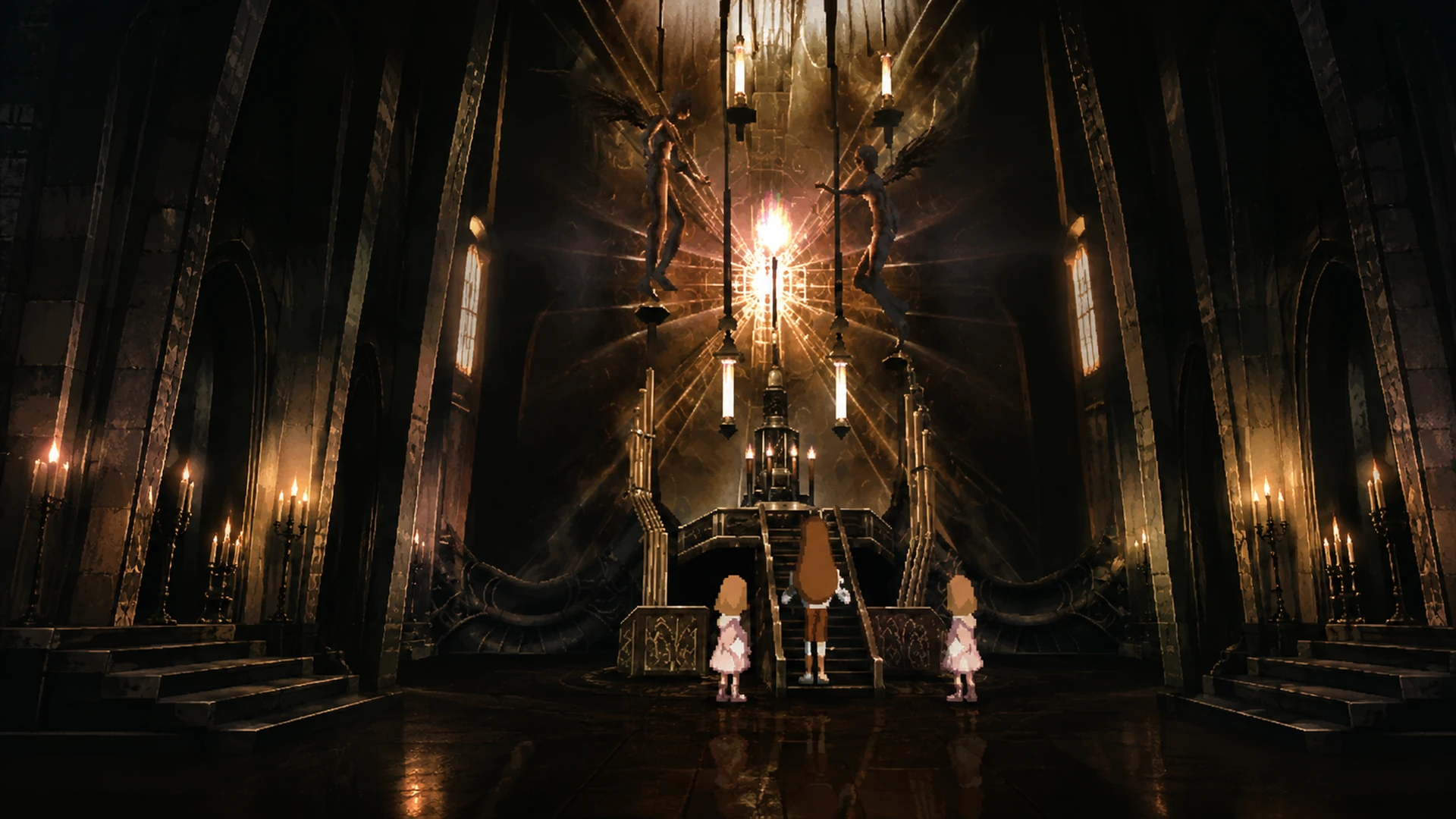
Xenogears is one of those PlayStation RPGs that refuses to stay in a neat box. It begins with Fei Fong Wong in a quiet village, then pulls him through desert wars, Gear combat, religious institutions, hidden empires, memory fractures, reincarnation, and a weaponized idea of God. The game is famous because it is ambitious; it is still argued over because that ambition is uneven, strange, and sometimes brilliant.
Xenogears gives players a dense story, a large cast, two battle systems, a layered setting, memorable music, heavy symbolism, and a sharply compressed second disc. The pacing can be rough, the camera can fight you, and Disc 2 changes format in a way no modern publisher would likely approve. Its ambition is also why players keep returning to it.
This overview discusses premise, character arcs, power structures, late-game themes, and several major ideas behind Xenogears. It avoids a beat-by-beat ending recap, but it does talk naturally about pieces of the game that shape its reputation. If you want to enter completely blind, play first and return later.
Xenogears Overview: The Quick Answer
Xenogears is a 1998 PlayStation JRPG developed by Square. It was directed and written by Tetsuya Takahashi, with music by Yasunori Mitsuda, character design by Kunihiko Tanaka, and mechanical design by Junya Ishigaki. On the surface, it is a mecha RPG about a young man caught in a war between nations. Underneath, it is a science-fiction epic about identity, inherited trauma, artificial divinity, and the machinery people build to control each other.
The game alternates between on-foot exploration, character battles, Gear battles, long story scenes, and dungeons that can feel awkward by modern standards. Its combat uses Deathblows, Ether, and fuel-based robot fights. Its story moves from village tragedy to national conflict, then to a buried history of planetary systems, engineered faith, and cycles of reincarnation.
The simplest way to describe Xenogears is this: it is not the cleanest PlayStation RPG, but it may be one of the most interesting. Players who want fast pacing and modern convenience may bounce off it. Players who want a dense narrative RPG with mechs, psychology, theology, romance, and a soundtrack that feels ancient and mechanical at the same time should still pay attention.
Xenogears Story Summary: From Lahan to Deus
Xenogears starts with Fei Fong Wong living in Lahan, a peaceful village on the continent of Ignas. Fei has no clear memory of his past, but he has friends, routine, and a fragile sense of belonging. That life collapses when military forces clash near the village and Fei ends up piloting a mysterious Gear called Weltall. The result is catastrophe. Lahan is destroyed, Fei is blamed, and the game’s first emotional wound is not a villain’s speech but a home turned into wreckage.
That opening still matters to the shape of the story. Fei is not a clean heroic blank slate. He is traumatized, defensive, and afraid of the power inside him. Xenogears keeps returning to the question of what a person does when the self becomes unreliable. Fei wants answers about the machine he piloted, the rage he unleashed, and the memories he cannot reach.
From there, the story widens. Aveh and Kislev are locked in a manipulated war. Gears have transformed political power. The masked commander Grahf appears as a nightmare from Fei’s hidden past. Gebler and Solaris operate above surface nations. Ethos presents itself as a religious authority, but its role in technology, salvage, and information control is not innocent. The deeper Fei travels, the less the world looks like a normal fantasy setting and the more it looks like a planet organized around buried systems.

By the time Deus enters the picture, the game has moved far beyond the village. Deus is not simply a final boss waiting at the edge of the map. It is tied to the origin of the world’s crisis, the manipulation of civilizations, the purpose of Solaris, and the way Xenogears turns spiritual language into machinery. The story’s scale can be exhausting, but it is also the source of the game’s force. Xenogears keeps asking whether human choice can survive inside systems built before the characters were born.
Main Characters in Xenogears
Xenogears has a large party, but the central cast is not merely a roster of combat roles. Most major characters embody a different relationship to war, faith, class, knowledge, memory, or technology.
Fei Fong Wong
Fei is the emotional center of Xenogears. His arc is not only about discovering who he is; it is about facing why his identity has been divided. The game uses Fei to turn trauma into structure. His hidden selves, blackouts, fear of violence, and connection to Weltall make the player treat “main character power” as a problem rather than a gift.
Elly Van Houten
Elly begins as an officer tied to Solaris and its worldview, but she becomes one of the game’s most important moral anchors. Her relationship with Fei is romantic, but it is also philosophical. Across the story, Elly represents compassion inside a world that keeps converting people into tools, classes, bodies, and data.
Citan Uzuki
Citan is the calm friend who knows too much. His intelligence, medical skill, and political awareness make him useful from the start, but his real role is more complicated. Citan often stands between the player and the full truth, and that restraint gives him a quiet tension that pays off as the story opens.
Bart, Rico, Billy, Maria, and Emeralda
Bart adds rebellion, class conflict, and royal obligation. Rico brings the prison city’s brutality into the party. Billy turns faith, family, and institutional betrayal into a personal crisis. Maria embodies the cost of using children and machines as weapons. Emeralda connects the party to older histories and to questions of artificial life. Not every member receives equal development, but the cast helps Xenogears feel like a world of broken systems rather than a single hero’s problem.
Antagonists, Institutions, and Hidden Systems
Xenogears works because its enemies are not all doing the same thing. Grahf is personal and mythic, a figure who seems to understand Fei before Fei understands himself. Miang is recurrence, manipulation, and the chilling sense that history has been staffed by the same role again and again. Krelian is one of the game’s most unsettling figures because his cruelty is mixed with grief, intellect, and a desire to remove human suffering by removing human freedom.
Solaris is the game’s most important institution: a place above the world and the ordering principle imposed on everyone below it. Surface dwellers are treated as lesser beings. Nations fight wars shaped by hidden hands. Technology becomes a system of classification. Solaris makes the player feel that the world’s injustice is designed rather than accidental.
Ethos adds another layer. On the surface, it resembles a religious and salvage organization. As the story unfolds, its position between belief, technology, and control becomes harder to ignore. Xenogears is filled with religious imagery, but its sharpest critique is aimed at institutions that turn belief into obedience and suffering into policy.
Battle Mechanics: Deathblows, Ether, and Gear Combat
Xenogears uses two related battle systems: human-scale combat and Gear combat. On foot, characters spend action points on attack strings. Different button combinations build toward Deathblows, which are special martial-arts techniques learned through repeated use. This gives fights a physical feel that many menu-based RPGs lack because each attack builds a rhythm instead of selecting a single menu command.
Ether fills the magic-like role, though the game frames it through its own setting language. Some characters lean more heavily into Ether than others, and equipment matters, but the game’s personality comes from the way martial arts and machinery share space. A hand-to-hand combo and a giant robot fight are part of the same story logic: bodies and machines are both instruments of power.
Gear combat changes the resource layer. Gears use fuel. Attacks consume it. Boosters increase speed at a cost. Upgrades matter because Gears do not grow like ordinary party members. A poorly prepared Gear can become a liability in a long fight, and the game often wants the player to think about engines, frames, armor, and fuel as much as levels.
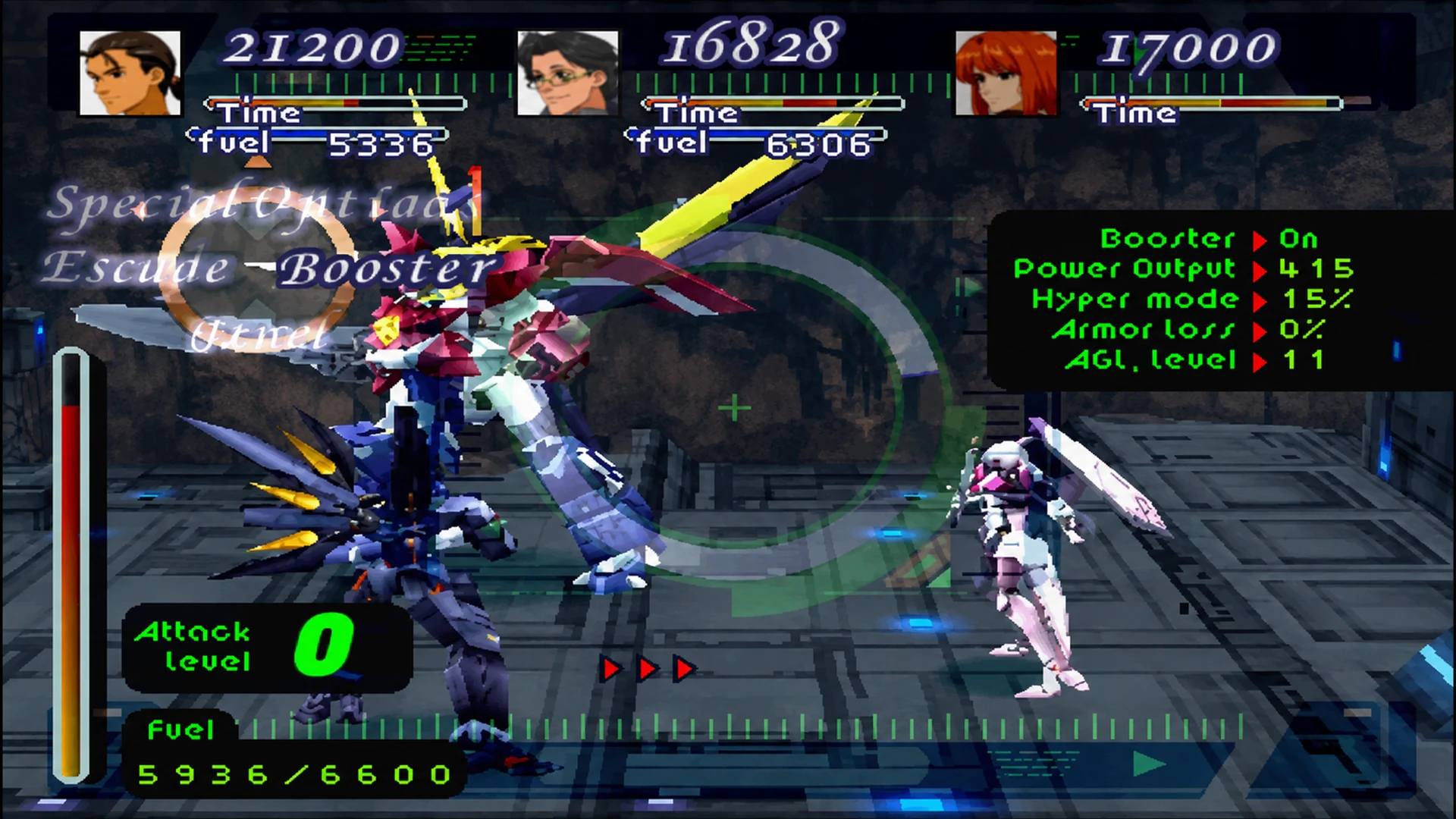
The system is memorable, though not flawless. Regular encounters can drag, and some dungeons feel longer than they need to be. The best part of the battle design is how well it fits the fiction. Xenogears is a game about humans operating inside machines, institutions, and inherited roles. The combat keeps returning to that split: person and Gear, body and system, instinct and control.
Setting and Worldbuilding: A Planet Built on Buried Systems
The world of Xenogears begins with familiar RPG geography: a village, a forest, a desert, a kingdom, a prison city, and a church-like institution. Then the game keeps adding layers. Lahan is innocence lost. Aveh and Kislev are surface nations trapped in war. Nisan offers a different religious and cultural texture. The Thames turns salvage culture into a floating community. Shevat carries resistance, memory, and altitude. Solaris reveals the social architecture behind the surface world.
What makes the setting memorable is the feeling that every culture is living on top of older decisions. Machines are not merely tools. Ruins are not only ruins. Myths may be corrupted memories of technology. Social classes may be production categories. The planet itself feels archaeological, as if every map is hiding a previous version of the truth underneath it.
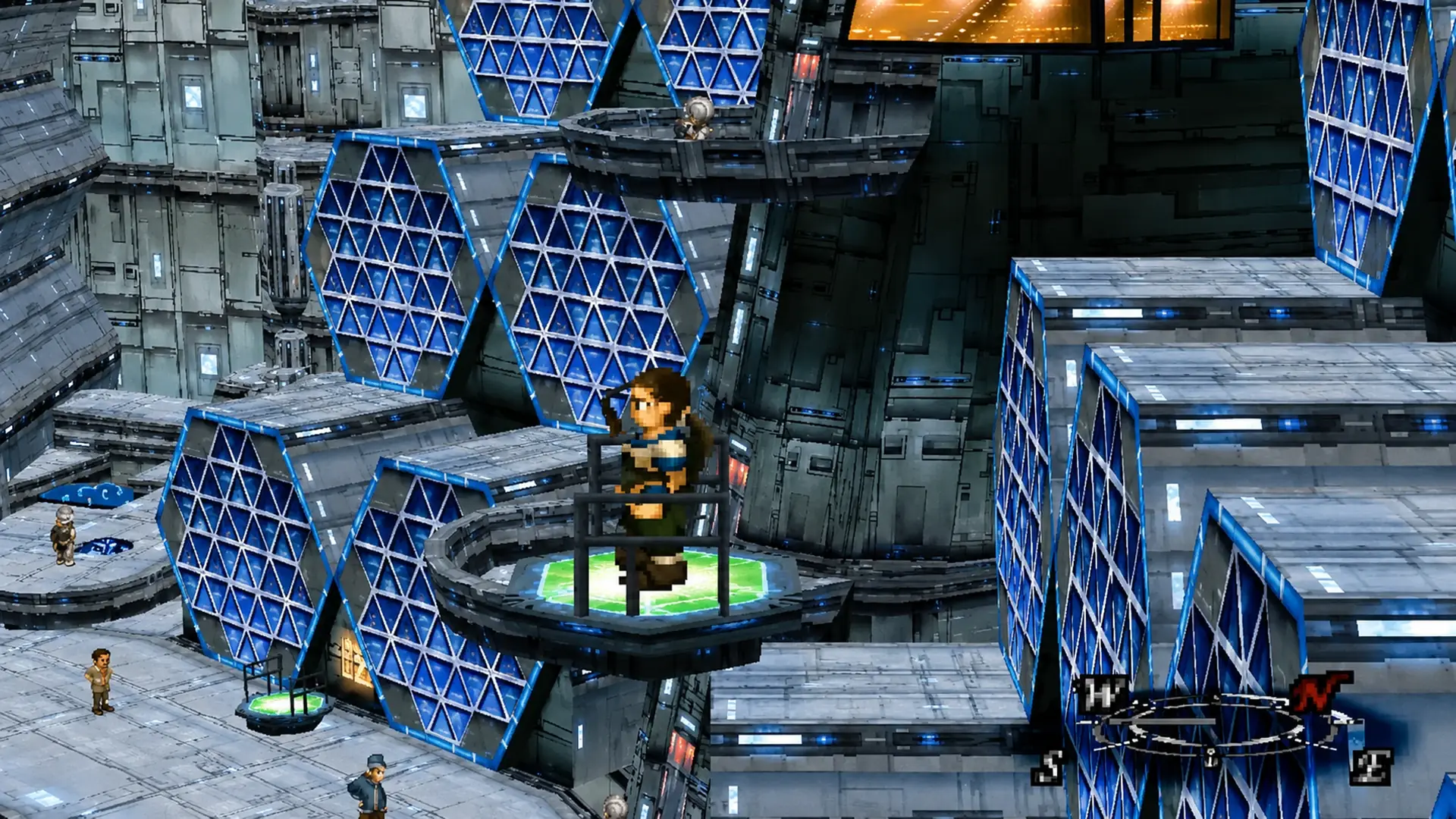
This is also why Xenogears can feel overwhelming. It is constantly shifting scale. A scene may start as a political discussion, turn into a Gear operation, and end by implying an ancient system that reframes the entire conflict. The density is part of the appeal. The world does not feel built to be consumed quickly. It feels like a machine the player slowly learns to read.
Xenogears Music: Yasunori Mitsuda’s Sacred Machine
Yasunori Mitsuda’s score is one of Xenogears’ defining achievements. The soundtrack gives the game emotional continuity even when the pacing becomes uneven. Square Enix Music’s Xenogears listings preserve the game’s musical legacy through soundtrack, revival, concert, vinyl, arranged, and orchestral releases, which says a lot about how central the music remains to the game’s reputation.
The score often sounds ancient, wounded, and ceremonial, even when the story is full of machines and military hardware. Tracks such as “Village Pride,” “A Distant Promise,” “Steel Giants,” “Shevat -The Wind Calls-,” “Solaris -Supernal Paradise-,” “Flight,” and “Small Two of Pieces” help hold the game together. They make deserts, churches, hangars, and impossible endgame spaces feel connected by memory rather than just plot.
That mix of folk color, melancholy melody, and mechanical scale fits the game’s central tension. Xenogears is always balancing body and machine, myth and system, intimacy and cosmic history. The music understands that tension better than almost any other part of the production.
Visual Art and Presentation
Xenogears has a distinct visual identity: 2D character sprites moving through 3D environments, anime cutscenes, chunky mecha, rotating cameras, industrial ruins, solemn churches, and huge late-game spaces that feel half sacred and half engineered. Some of it has aged roughly. The camera can be awkward, the platforming can be frustrating, and the visual clarity is not always clean.
Still, the game has images that stick: Weltall standing against disaster, desert ships cutting across sand, Shevat floating above the world, Solaris hiding its order behind beauty, and Gears turning personal conflict into metal. Xenogears was not simply trying to look impressive. It was trying to stage a massive story on late-1990s hardware, and the strain is visible.
That strain gives the game character. Many smoother RPGs from the era are easier to play but less haunting to remember. Xenogears keeps its identity because the visual roughness and the thematic scale are tied together. It feels like a project too large for its container.
Themes and Symbolism
Identity and the divided self
Fei’s arc is about integration. He is not simply getting better at fighting. He is being forced to face parts of himself split off by trauma, memory loss, and power he does not understand. Xenogears uses repression, alternate selves, and the unconscious to make inner conflict visible. Few RPGs from its era are as direct about the fear of one’s own mind.
Religion, institutions, and control
Xenogears uses names, images, and structures drawn from religious language, but its hardest questions are institutional. Who gets to define truth? Who benefits when people are told their suffering is sacred? What happens when a church, empire, or hidden city turns belief into infrastructure? Ethos, Solaris, and Deus each show a different version of organized control.
Reincarnation and recurrence
Cycles are central to Xenogears. People repeat roles. Civilizations repeat mistakes. Love, guilt, and violence echo across time. Reincarnation is not decorative lore; it lets the game ask whether people can escape inherited patterns or whether identity itself has been scripted by systems older than memory.
Technology as theology
The title says a lot. Gears are not only robots. They are mechanisms of fate, war, identity, and false divinity. Deus turns godhood into machinery. Nanomachines turn bodies into systems. Ancient technology becomes myth after enough time passes. Xenogears is fascinated by the moment when a machine becomes sacred because the people looking at it no longer understand it.
Love against determinism
Fei and Elly’s relationship is romantic, but it is also one of the story’s central arguments. If history is full of cycles, engineered roles, reincarnation, and control systems, then love becomes a force that can interrupt repetition. Xenogears treats love less as decoration and more as resistance to programming.
The Disc 2 Question
No serious Xenogears overview can ignore Disc 2. The second disc shifts toward heavy narration, with Fei and Elly recounting major events while the game presents fewer fully playable sequences. Instead of moving through every event in traditional RPG form, players receive long explanations, compressed scenes, and story delivery that feels closer to a visual summary at points.
Kotaku’s 2017 interview with Tetsuya Takahashi gives useful production context: the team faced schedule limits, and the second disc’s structure was a compromise that allowed the story to reach its ending rather than stop after the first half. That does not erase the problem. Some arcs feel rushed. Some events sound summarized when they should have been played. Some players never forgive the shift.
Yet Disc 2 also contains many of the ideas that define Xenogears: deeper revelations about Fei, Elly, Krelian, Miang, Deus, and the world’s hidden machinery. It is flawed, but not disposable. In a strange way, the compressed delivery also exposes the game’s skeleton. You can see how much story Takahashi and the team were trying to carry, even when the production could not fully support it.
Who Should Play Xenogears Today
Xenogears is still worth approaching if you like dense story-first RPGs, mecha fiction with political and spiritual stakes, games that mix psychology and science fiction, classic Square experimentation, and music that carries emotional weight. It is especially rewarding for players who are willing to read, think, and sit with imperfect presentation in exchange for a world that feels unusually loaded.
It may not be the right fit if you need modern pacing, minimal cutscenes, full voice acting, smooth cameras, balanced development for every party member, or a final act that stays fully playable throughout. Xenogears asks for patience. It rewards that patience with a story few games would even attempt now.
The best way to approach it is not as a flawless classic. Treat it as a huge, strange, personal RPG that reached beyond what its production could comfortably hold. That is where its reputation lives: not in polish, but in scale, conviction, and the number of ideas still rattling around after the credits.
Frequently asked questions
Is Xenogears connected to Xenosaga or Xenoblade?
Xenogears is part of the broader creative lineage associated with Tetsuya Takahashi and later Xeno projects, but it should not be treated as required homework for Xenosaga or Xenoblade. Think of it as a thematic ancestor rather than a simple direct-continuity chapter.
Is Xenogears still worth playing?
Yes, if you value story ambition, atmosphere, music, and thematic density over modern convenience. It is harder to recommend as a smooth gameplay experience than as a landmark narrative RPG, but its best ideas still feel unusually bold.
Is Xenogears too confusing?
It can be. The story uses hidden histories, reincarnation, political manipulation, theology, psychology, and late-game exposition. The best approach is to follow the emotional arcs first: Fei’s identity, Elly’s awakening, Citan’s knowledge, Bart’s rebellion, Billy’s faith, and Krelian’s grief.
Does Xenogears have good combat?
It has memorable combat ideas rather than perfectly balanced combat. Deathblows make on-foot fights feel physical, while Gear battles add fuel management and machine upgrades. The systems fit the theme well, but encounter pacing and difficulty can feel dated.
Should new players read spoilers first?
Only lightly. Xenogears is built around revelations that reframe earlier events. New players should understand the premise, tone, and Disc 2 caveat, but full ending summaries are better saved for after playing or watching the story.
Sources
NexusArc Staff
NexusArc Staff publishes desk-written reporting, guides, updates, and service information prepared by the NexusArc editorial team.