

PlayStation Pulse Elite vs Pulse Explore: Which PS5 Audio Device Fits Your Setup?
A practical comparison of Sony’s Pulse Elite headset and Pulse Explore earbuds, including official battery claims, charging, microphones, connectivity, and buyer fit.
The quick decision
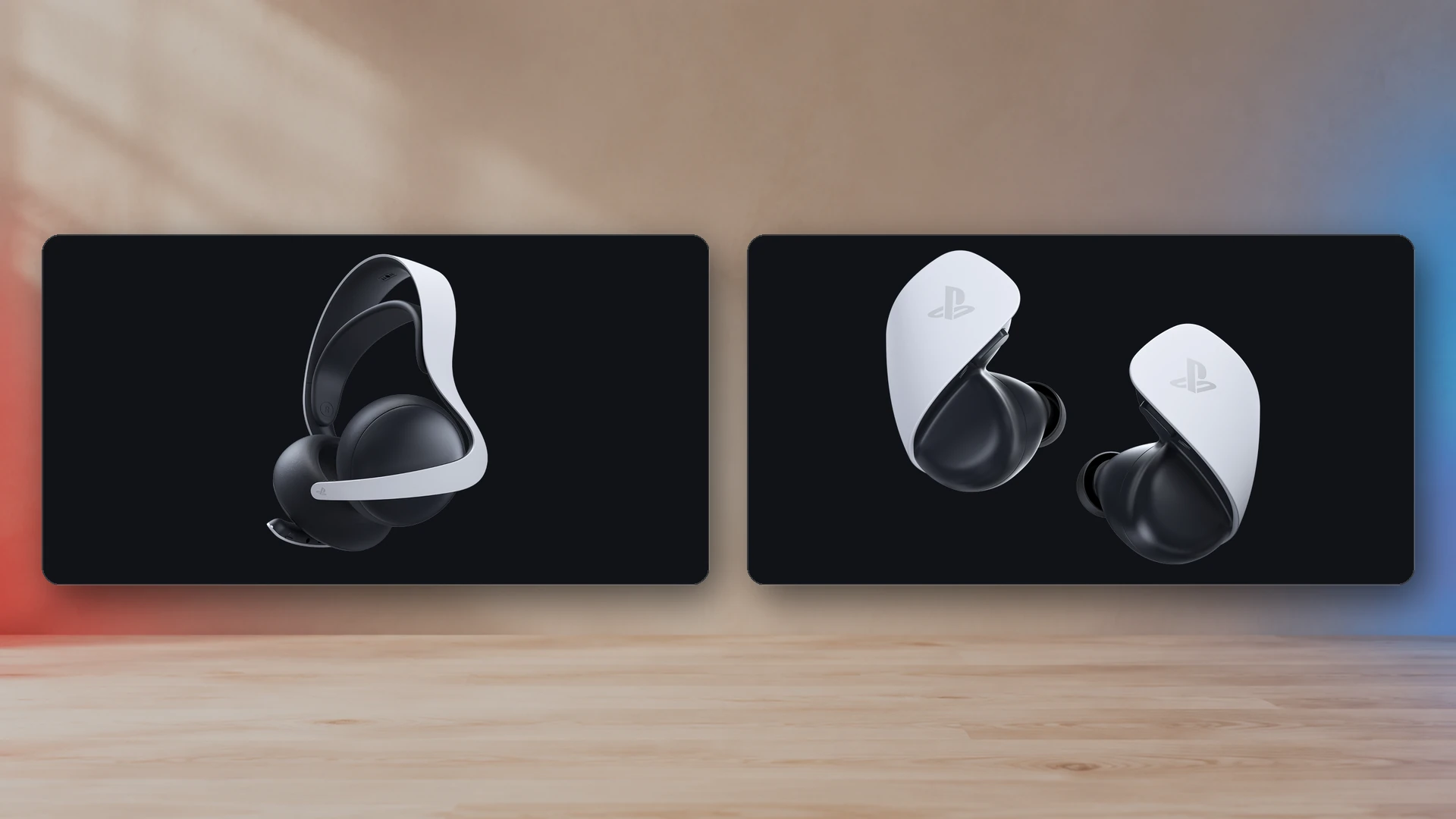
Choose Pulse Elite if you play for long sessions, want a retractable boom microphone, and prefer a traditional over-ear headset. Choose Pulse Explore if portability matters more, you want earbuds that can move between a PS5 setup and a bag, and you are comfortable with shorter battery life per charge.
Both products use planar magnetic drivers and PlayStation Link for low-latency wireless audio. Both can also maintain a Bluetooth connection, which makes it possible to keep a phone available while using PlayStation Link. The deciding factors are form, battery, microphone design, charging habits, and comfort.
Pulse Elite: the better fit for long sessions
Pulse Elite is the conventional headset in the pair. PlayStation lists up to 30 hours of battery life, with up to two hours of use from a ten-minute charge. That battery profile is the clearest practical advantage: a player can use the headset across several sessions without returning it to a case after every night.
The retractable boom microphone is also easier to position consistently than hidden earbud microphones. That does not guarantee broadcast-quality voice capture, but it gives the user direct control over mic distance and placement. Players who regularly coordinate in competitive games or party chat should value that predictability.
The tradeoff is size. An over-ear headset takes space, can become warm, and places more pressure on the head. Comfort is personal, so buyers who wear glasses or dislike suspension-style headbands should test the fit where possible.
Pulse Explore: portability first
Pulse Explore uses a compact earbud design and a charging case. PlayStation lists up to five hours of battery life in the earbuds plus up to ten additional hours through the case. That is enough for many commutes and shorter sessions, but it requires more active charging than Pulse Elite.
The earbuds use two hidden microphones rather than a boom. The cleaner design is useful when moving between devices, but microphone consistency depends more on fit, background noise, and how the signal processing handles the user’s voice. Players whose main priority is team communication should compare real microphone samples before buying.
Earbud comfort is also highly individual. A secure seal can improve bass and isolation, while a poor fit can make the sound thin or uncomfortable. The portable form is the reason to choose Explore, not an assumption that smaller automatically means better.
PlayStation Link and Bluetooth
PlayStation Link is Sony’s low-latency wireless connection for compatible PlayStation audio devices. It is intended to carry detailed game audio without the delay commonly associated with ordinary Bluetooth gaming. A USB adapter is part of the setup for supported host devices.
The ability to use PlayStation Link and Bluetooth at the same time is useful for a phone call, voice app, or other mobile audio while the game connection stays active. Buyers should still verify the exact device combination they plan to use, especially on PCs, handhelds, or phones with limited ports.
Sound and planar magnetic drivers
Both devices use planar magnetic drivers, a technology often associated with fast transient response and controlled detail. Driver type alone does not determine whether the tuning will suit a listener. Ear shape, fit, volume, game mix, and personal preference still matter.
For competitive games, positional clarity and consistent imaging are more useful than exaggerated bass. For cinematic single-player games, a fuller low end may feel more exciting. Neither device should be chosen only because “planar magnetic” appears on the specification sheet.
Battery and charging comparison
| Feature | Pulse Elite | Pulse Explore |
|---|---|---|
| Form | Over-ear wireless headset | Wireless earbuds with charging case |
| Official battery claim | Up to 30 hours | Up to 5 hours, plus up to 10 hours from the case |
| Quick charging | Up to 2 hours from 10 minutes | Use the case between sessions; verify current support documentation for charging details |
| Microphone | Retractable flexible boom mic | Two hidden integrated microphones |
| Best use | Long home sessions and frequent voice chat | Portable play and mixed-device use |
Who should buy Pulse Elite?
- Players who regularly use party chat.
- People who want a battery that can cover several long sessions.
- Users who prefer physical controls and a traditional headset fit.
- Players who do not need an audio device to fit in a pocket.
Who should buy Pulse Explore?
- Players who move between a console, phone, laptop, or handheld.
- People who strongly prefer earbuds over an over-ear headset.
- Users willing to charge through a case more often.
- Players who value portability above microphone positioning.
What to check before ordering
Confirm current regional pricing, return policy, included adapters, replacement ear tips, and compatibility with every device in the setup. Audio products are difficult to judge from specifications alone, so a retailer with a reasonable return window is more valuable than a small launch discount.
The NexusArc recommendation
Pulse Elite is the safer all-purpose recommendation for a PS5 player who wants long battery life and reliable voice-chat positioning. Pulse Explore is the more specialized option: it makes sense when portability and an earbud form are non-negotiable. The right choice is not the newer or smaller device; it is the one that fits the way the player actually moves between sessions.
Sources
- PULSE Elite wireless headset official pagePlayStation
- PULSE Explore wireless earbuds official pagePlayStation
- How to connect and charge PULSE ElitePlayStation Support
NexusArc Staff
NexusArc Staff publishes desk-written reporting, guides, updates, and service information prepared by the NexusArc editorial team.